
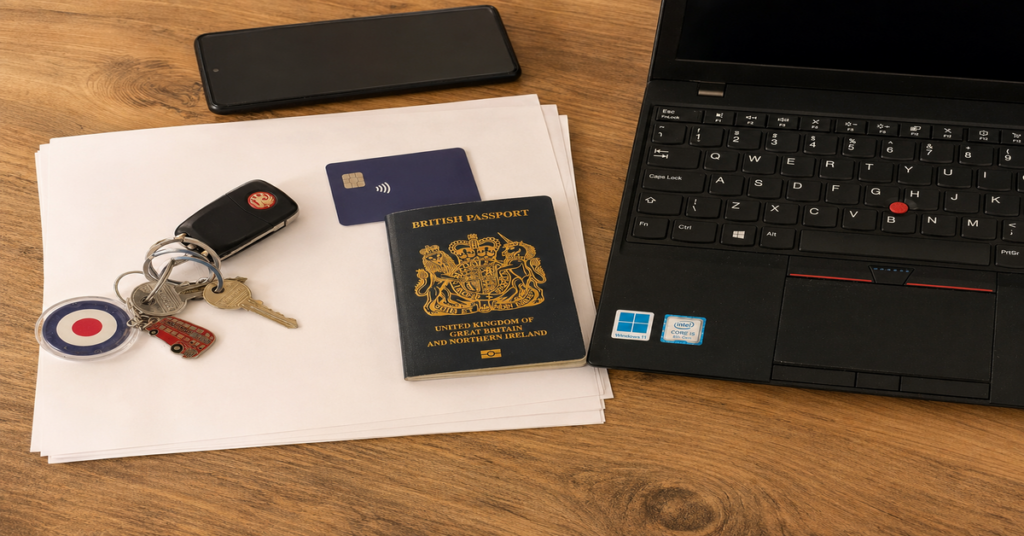
Insurance is one of those UK life admin tasks that many new arrivals do not think about until something goes wrong.
When you first move to the UK, you may be focused on your visa, job, accommodation, bank account and phone number. But insurance can also be important, especially if you are renting, driving, bringing pets, travelling with valuables or moving with family.
The type of insurance you need depends on your situation. A single student moving into furnished accommodation will have different needs from a family renting a house, buying a car or bringing pets to the UK.
This guide explains the main types of insurance new arrivals may want to consider after moving to the UK.
- Who This Guide Is For
- Do New Arrivals Need Insurance in the UK?
- Travel Insurance Before and During Your Move
- Contents Insurance for Renters
- Tenant Liability Insurance
- Health Cover and the NHS
- Car Insurance in the UK
- Pet Insurance
- Phone, Laptop and Gadget Insurance
- Life Insurance and Family Protection
- Income Protection and Critical Illness Cover
- Common Insurance Mistakes to Avoid
- New Arrival Insurance Checklist
- Insurance for New Arrivals FAQs
- 🛡️ Do new arrivals need insurance in the UK?
- 🚗 Is car insurance required in the UK?
- 🏠 Do renters need contents insurance?
- 🐾 Should I get pet insurance in the UK?
- 💻 Is gadget insurance worth it?
- 🏥 Do I need private health insurance in the UK?
- ✈️ Should I get travel insurance when moving to the UK?
- 📄 What should I check before buying insurance?
- Related Guides
- Latest Articles
Who This Guide Is For
This guide is for people who have recently moved to the UK or are planning to arrive soon.
It may help if you are moving for work, study, family, the Youth Mobility Scheme, a Graduate Visa or another long-term route.
It is also useful if you are trying to understand which types of insurance are essential, which are optional, and which may depend on your lifestyle.
💡 A Quick Note from Kris: I would not rush into buying every type of insurance straight away. Start with what is legally required or protects your biggest risks, then add other cover if it genuinely fits your situation.
Do New Arrivals Need Insurance in the UK?
Not every type of insurance is required in the UK.
Some insurance is legally required in certain situations. For example, if you drive a car in the UK, you must usually have valid car insurance.
Other insurance is optional but can still be useful. Contents insurance, gadget insurance, pet insurance and travel insurance may help protect you from unexpected costs.
The main question is not “do I need every insurance product?” but “what would be difficult or expensive for me to replace or pay for if something went wrong?”
That might include:
- your belongings
- your phone or laptop
- your pet’s vet bills
- your car
- your rental liability
- your income
- your family’s financial security
Travel Insurance Before and During Your Move
Travel insurance can be useful when moving to the UK, especially before you are fully settled.
It may cover things such as lost luggage, delayed flights, medical issues while travelling, cancellations, or emergency support during the journey.
Even if you are moving to the UK long term, your actual travel period can still carry risks. This is especially true if you are travelling with children, pets, expensive luggage, electronics or multiple flights.
Before buying travel insurance, check:
- whether it covers one-way relocation travel
- whether it covers your destination and stopovers
- what medical cover is included
- whether valuable items are covered
- whether lost or delayed baggage is covered
- whether pre-existing medical conditions are excluded
- when the cover starts and ends
💡 A Quick Note from Kris: If you are carrying important documents, medication or electronics, I would still keep them in hand luggage where possible. Insurance is useful, but avoiding the problem in the first place is better.
Contents Insurance for Renters
Contents insurance protects your personal belongings inside your home.
If you rent in the UK, your landlord is usually responsible for insuring the building itself, but not your own possessions. Your belongings are normally your responsibility.
Contents insurance may cover things like:
- clothes
- furniture you own
- electronics
- jewellery
- kitchen items
- personal belongings
- theft, fire or water damage, depending on the policy
This can be useful if you are renting a flat, house or shared accommodation and would struggle to replace your belongings after theft, fire or damage.
When comparing contents insurance, check whether it covers items away from home, accidental damage, high-value items and shared accommodation.
Tenant Liability Insurance
Some renters may also come across tenant liability insurance.
This can cover damage you accidentally cause to your landlord’s property, fixtures or fittings. For example, damaging flooring, furniture or appliances that belong to the landlord.
Not every renter needs a separate tenant liability policy, because some contents insurance policies include tenant liability cover. However, it is worth checking your tenancy agreement and insurance policy.
If you are renting a furnished property, this may be more relevant because more items in the home belong to the landlord.
Health Cover and the NHS
Many visa holders pay the Immigration Health Surcharge as part of their visa application, which gives access to NHS services during their stay.
However, NHS access does not mean every possible cost is covered in every situation. You may still pay for things like prescriptions in England, dental care, eye tests, private treatment or certain services.
Some people choose private health insurance for faster private appointments or additional cover, but this is optional and depends on your budget and needs.
For many new arrivals, the main healthcare priority is understanding how the NHS works, registering with a GP and knowing what to do in an emergency.
Useful guide:
Car Insurance in the UK
If you drive in the UK, car insurance is usually a legal requirement.
You cannot normally drive on UK roads without valid insurance. This applies whether you own the car, finance the car or drive someone else’s car.
Common types of car insurance include:
- third party
- third party, fire and theft
- comprehensive
Comprehensive insurance usually gives the widest cover, but the best choice depends on your car, budget, driving history and risk.
New arrivals may find car insurance expensive if they do not have a UK driving history or no-claims bonus. Some insurers may consider overseas driving experience, but this varies.
Before buying or financing a car, check the likely insurance cost first. The insurance can sometimes be more expensive than expected.
Useful guide:
Pet Insurance
If you are moving to the UK with a cat or dog, pet insurance may be worth considering.
Vet bills in the UK can be expensive, especially for accidents, emergency treatment, surgery or ongoing conditions.
Pet insurance may help cover vet treatment, but policies vary a lot. Some cover accidents only, while others cover illness, ongoing conditions or lifetime treatment limits.
Before choosing pet insurance, check:
- what conditions are covered
- annual or lifetime limits
- excess payments
- exclusions
- waiting periods
- whether pre-existing conditions are covered
- age limits for older pets
💡 A Quick Note from Kris: If you bring a pet to the UK, I would at least check pet insurance prices early. Even if you decide not to buy it, you will understand the risk and possible vet costs better.
Useful guide:
Phone, Laptop and Gadget Insurance
Many new arrivals rely heavily on phones, laptops and tablets.
You may need them for work, study, banking, maps, translation, job applications, two-factor authentication and staying in touch with family.
Gadget insurance may cover theft, loss, damage or breakdown, depending on the policy. Some bank accounts, home contents policies or phone contracts may also include gadget cover, so check before buying separate insurance.
Before paying for gadget insurance, think about:
- how expensive the item is
- whether you could replace it yourself
- whether it is already covered elsewhere
- whether loss and theft are included
- whether accidental damage is included
- how much the excess is
For cheaper devices, separate insurance may not always be worth it. For expensive phones or laptops, it may be more useful.
Life Insurance and Family Protection
Life insurance is not something every new arrival needs immediately, but it can become more relevant if you have dependants, a partner, children, a mortgage or financial commitments.
Life insurance is designed to pay out if the insured person dies during the policy term, depending on the policy.
This may help family members cover costs such as rent, mortgage payments, childcare, debts or everyday living costs.
If you are single with no dependants, life insurance may be less urgent. If you have a family relying on your income, it may be worth looking into once you are settled.
Income Protection and Critical Illness Cover
Income protection and critical illness cover are more advanced types of insurance.
Income protection may pay part of your income if you cannot work due to illness or injury, depending on the policy.
Critical illness cover may pay a lump sum if you are diagnosed with a covered serious illness.
These policies can be useful for some people, but they can also be expensive and come with exclusions. They are worth considering carefully if you have a family, mortgage, debts or limited savings.
For many new arrivals, this may be something to revisit after the basics are sorted.
Common Insurance Mistakes to Avoid
A common mistake is buying insurance without understanding what is actually covered.
Always check the policy details, exclusions, excess and claim limits before paying.
Another mistake is assuming the cheapest policy is always best. Cheap cover may have high excesses, low limits or important exclusions.
Some people also buy duplicate cover. For example, a phone might already be covered under a packaged bank account, contents insurance or manufacturer plan.
New arrivals may also forget to update addresses, vehicle details or personal circumstances. Incorrect information can cause problems if you need to claim.
It is also important not to wait until after something happens. Insurance usually needs to be in place before the event you want to claim for.
New Arrival Insurance Checklist
When thinking about insurance in the UK, check:
- whether you will drive in the UK
- whether your rental property needs contents cover
- whether tenant liability cover is included
- whether you are bringing expensive electronics
- whether you are moving with pets
- whether you need travel insurance for the move
- whether your family depends on your income
- whether you already have cover through a bank account or employer
- policy exclusions and excess amounts
- cancellation rules
- claim limits
- whether the insurer has good customer reviews
💡 A Quick Note from Kris: I would start with car insurance if you drive, contents insurance if you rent with valuables, and pet insurance if you bring animals. After that, decide what else is actually worth paying for.
Insurance for New Arrivals FAQs
🛡️ Do new arrivals need insurance in the UK?
It depends on your situation. Car insurance is usually required if you drive, while other types such as contents, travel, gadget or pet insurance are optional.
🚗 Is car insurance required in the UK?
Yes, if you drive in the UK, you usually need valid car insurance. Driving without insurance can lead to serious penalties.
🏠 Do renters need contents insurance?
It is not usually a legal requirement, but it can protect your belongings if they are stolen, damaged or affected by fire or water damage.
🐾 Should I get pet insurance in the UK?
Pet insurance is optional, but it may help with unexpected vet bills. It can be useful if you are bringing a cat or dog to the UK.
💻 Is gadget insurance worth it?
It depends on the value of your phone, laptop or tablet and whether you could afford to replace it. Check whether the item is already covered by another policy before buying separate cover.
🏥 Do I need private health insurance in the UK?
Not always. Many visa holders can access the NHS after paying the Immigration Health Surcharge, but private health insurance may be useful for some people who want additional private cover.
✈️ Should I get travel insurance when moving to the UK?
It can be useful for the journey, especially if you are travelling with expensive luggage, children, pets or multiple flights.
📄 What should I check before buying insurance?
Check what is covered, what is excluded, the excess, claim limits, cancellation rules, customer reviews and whether you already have similar cover elsewhere.
Related Guides
If you are planning your UK move, these guides may also help:
- 👉 Planning Your Move to the UK
- 👉 Renting in the UK as a New Arrival
- 👉 Moving to the UK With Pets
- 👉 Car Finance in the UK
- 👉 First 90 Days in the UK
- 👉 Cost of Living in the UK
- 👉 Banking in the UK for New Arrivals
Have questions or want help choosing the right visa? Subscribe or explore more articles on UK visas and immigration tips.
Latest Articles

How to Move to the UK Without a Job: Visa Routes Explained
Moving to the UK without a job offer is possible, but the right route depends on your age, nationality, family background, study plans, and long-term goals. While many people move through employer sponsorship, there are still several legal ways to relocate to the UK without having a job lined up first. In this guide, we […]

England vs Scotland: Where Should You Live in the UK?
Deciding whether to live in England or Scotland is a big choice for anyone planning to move to the UK. While both nations share strong links as part of the United Kingdom, life in England and life in Scotland can feel very different. From the cost of living and job opportunities to culture, lifestyle, and […]

Carer Jobs in UK with Visa Sponsorship
The UK is facing a growing shortage of care workers, which has created huge opportunities for overseas applicants. One of the most in-demand visa routes is the Health and Care Worker visa, which allows eligible carers to live and work in Britain with sponsorship from approved employers. In this guide, we’ll explain why the UK […]

Immigration Salary List UK: Jobs, Salaries & Work Visa Guide
The Immigration Salary List UK (ISL) is one of the most important tools for anyone applying for a UK Skilled Worker visa. It highlights jobs where employers can hire overseas workers at lower salary thresholds, making it easier to qualify for visa sponsorship. In this guide, you’ll learn which jobs are on the Immigration Salary […]

Best Cities to Work in the UK: Jobs, Cost and Living Guide
Choosing where to live is one of the most important decisions when moving to the UK for work. While London is often the first choice, many other UK cities offer strong job opportunities, lower living costs, and a better work–life balance. This guide explores the best cities to work in the UK, based on employment […]

List of Companies That Can Sponsor Work Visas in the UK
Relocating to the UK for work is one of the most popular routes for skilled professionals looking for long-term career opportunities. One of the most important steps is finding a job with a UK company that can sponsor a work visa. Only employers with a Home Office sponsor licence can hire international workers under the […]

Homes for Rent in the UK for New Arrivals
Finding homes for rent in the UK can feel challenging when you first arrive. Many people moving to the UK for work or study will rent accommodation initially while they settle into the country. With strong demand for housing in major cities such as London, Manchester, Birmingham and Glasgow, the rental market can be competitive. […]

UK Work Visa from India: Shortage Occupations and How to Apply
The UK work visa from India is one of the most common routes for Indian professionals looking to live and work in the United Kingdom. Each year thousands of Indian citizens move to the UK for employment opportunities in sectors such as healthcare, technology, finance, and engineering. However, applying for a UK Work Visa from […]